.avif)

Miyamairi Kimono with Cranes and Pine in Sumi‑e Style
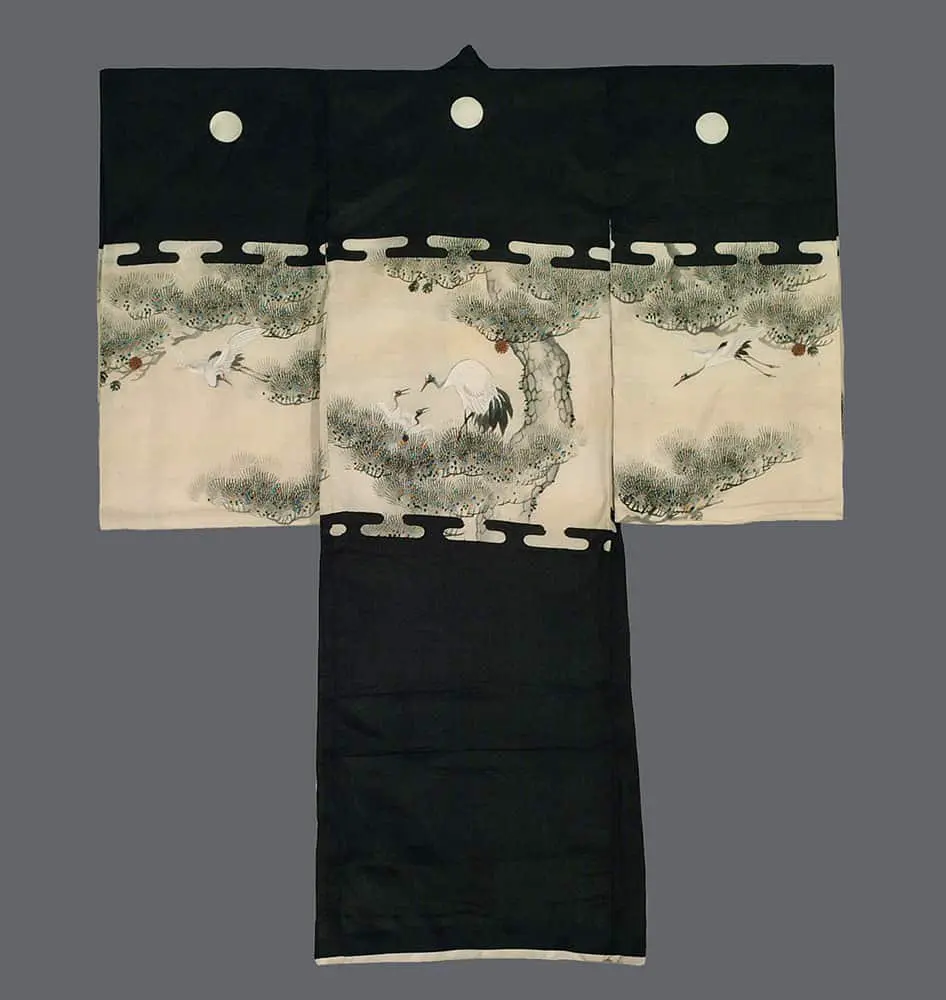


This silk miyamairi kimono for a baby girl's Shinto shrine blessing presents a serene composition of tsuru (cranes) and matsu (pine) rendered through sumi-e (ink painting) and painted techniques. The relatively thick silk—unusual for this garment type—suggests quality construction intended for a discerning purchaser who never came.
The design unfolds across a cream horizontal band framed by deep black silk above and below, with characteristic kasumi (mist) edges creating soft, scalloped transitions. An ancient gnarled pine tree anchors the center, its textured bark and spreading branches rendered with naturalistic brushwork. Multiple cranes appear throughout: one stands prominently on the rocky trunk, while others soar gracefully through the scene, their white bodies and black-tipped wings captured in elegant flight.
The predominantly monochromatic palette—soft greens, grays, and touches of rust-brown for pine cones against cream and black—creates an effect reminiscent of classical Japanese ink painting, demonstrating restraint and refinement appropriate for a girl's ceremonial garment.
Three blank white circular areas at the shoulders mark where family crests (mon) would have been added upon purchase. Their emptiness reveals this garment's poignant history as old warehouse stock—a beautiful ceremonial piece crafted with care but never claimed, never personalized, never worn for the sacred moment it was designed to honor. It remains a testament to craftsmanship awaiting a purpose it never fulfilled.
It remains in very good condition, with a few patinas, measuring 33 inches (84 cm) from sleeve-end to sleeve-end and standing at 42 inches (107 cm) in height.
Display & Installation Notes


Payment Options: We primarily accept PayPal for all transactions. Credit and debit cards are not accepted. If you prefer to pay by personal check instead of PayPal, please note this preference in the "Additional comments" field when placing your order.Ordering Process
To receive your PayPal invoice, simply fill out the form.
Shipping Details: We ship all orders to the address associated with your PayPal payment. Please ensure your PayPal shipping address is current and accurate.A phone number is required during checkout, as our shipping carrier may need to contact you regarding delivery questions.Shipping RatesUnited States and Canada: $20International destinations (air mail): $40